Cart
0
Dark spots are the most common skin complaint we hear about in Pakistan, and the one with the most dishonest marketing around it. The useful news is that the things which genuinely work are well established, cheap and slow. The unwelcome news is the slow part.
First, work out which kind you have
"Dark spots" covers several different things, and they do not respond the same way:
- Post-inflammatory hyperpigmentation. The brown mark left behind after a spot, a cut or a reaction. It fades on its own, usually over months, and fades faster with sun protection.
- Melasma. Larger, symmetrical patches, often across the cheeks, forehead or upper lip. Strongly linked to sun exposure, heat, pregnancy and hormonal contraception. It is manageable rather than curable, and it recurs.
- Sun spots. Small, well-defined patches on the face, hands and forearms from years of accumulated exposure.
Melasma in particular is worth identifying, because it is the one most likely to be made worse by aggressive treatment.
Sunscreen is the treatment, not the afterthought
Every single one of these is driven or worsened by UV. Without daily sun protection, any brightening product you buy is working against a tap you have left running.
This is not a seasonal matter in Pakistan, and it is not only about being outdoors: UVA passes through window glass and is present on overcast days. Melasma also responds to heat and visible light, which is why it flares in summer even with care. Use a broad-spectrum SPF daily, reapply if you are out for long stretches, and add a hat and shade where you can. Our Sun Shield SPF 50+ and the longer note on why SPF is a year-round habit cover this properly.
If you do one thing from this article, do this one.
The ingredients worth your money
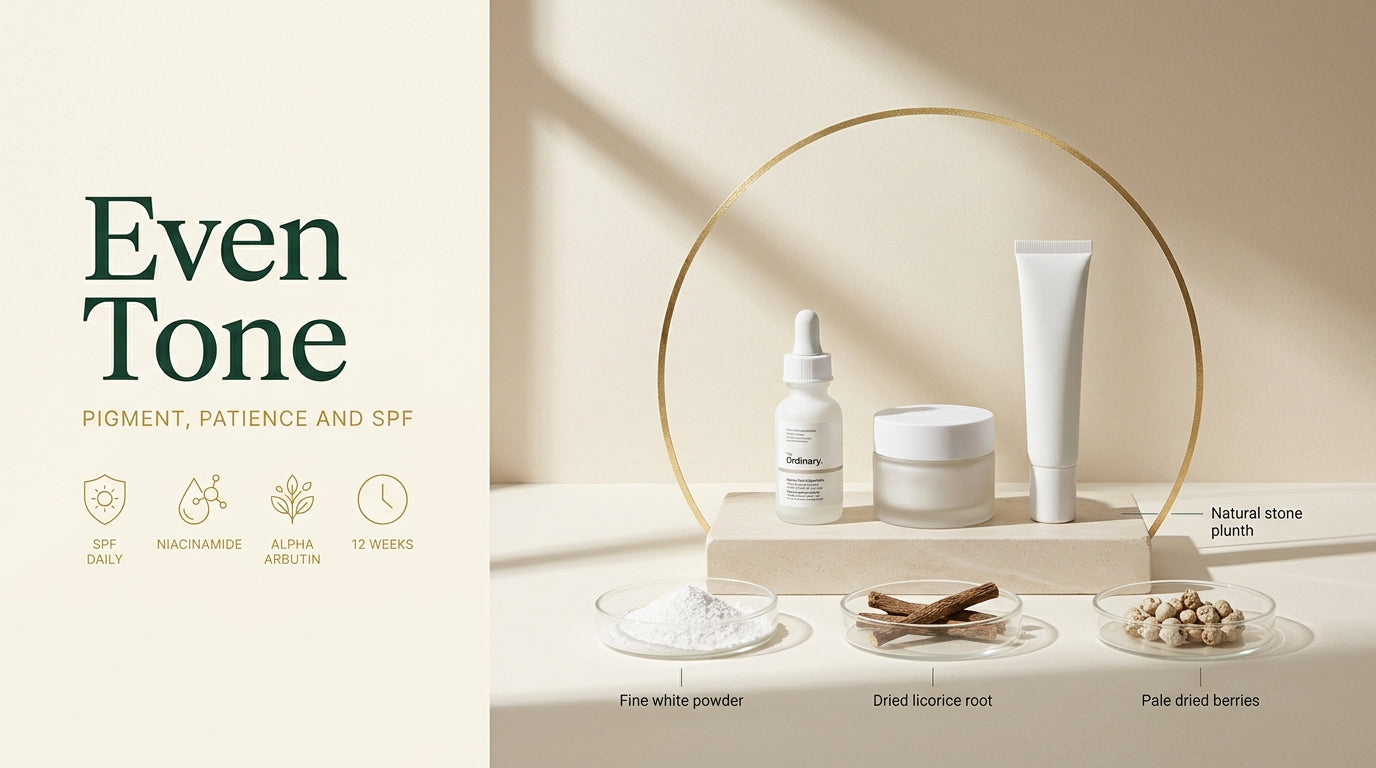
- Niacinamide. Interferes with the transfer of pigment to the skin's surface cells, and is well tolerated by almost everyone, including sensitive skin. A sensible starting point. Ours is in the 10% Niacinamide Serum.
- Vitamin C. An antioxidant that also slows pigment production, and it pairs well with sunscreen in the morning. See our Glow C Serum, and our comparison of niacinamide versus vitamin C if you are choosing between them.
- Alpha arbutin and licorice extract. Gentler pigment-inhibiting ingredients, often combined, as in our GlowFlash cream.
- Retinol. Speeds cell turnover so pigmented cells are shed sooner. Effective, but it needs introducing slowly. Read how to start retinol first.
- Exfoliating acids. Glycolic and salicylic acid help surface pigment clear, used two or three nights a week at most. Our AHA/BHA toner is formulated for that frequency.
Expect months, not weeks
Skin cells turn over roughly every four to six weeks, and pigment sits at different depths. Surface marks may lift in six to eight weeks. Deeper pigmentation and melasma take three to six months of consistent use, and melasma needs maintenance after that or it returns.
Photographs in the same light, once a month, are far more reliable than memory. Day-to-day you will not notice the change; across three months you will.
The mistakes that make it worse
- Stacking too many actives. Vitamin C, an acid and retinol all at once irritates the skin, and irritation itself causes more pigment. Introduce one thing at a time.
- Scrubbing. Physical scrubs aggravate melasma. Gentle beats vigorous every time.
- Picking spots. The mark left behind lasts far longer than the spot would have.
- Stopping when it improves. Particularly with melasma, this is how it comes back.
- Skin-lightening creams of unknown origin. Products sold informally for fast "whitening" have repeatedly been found to contain mercury or unlabelled potent steroids. Both damage skin, and mercury is a systemic poison. If a cream promises a dramatic change in two weeks, that speed is the warning sign.
A word on what we are not claiming
We make brightening products and we will not tell you they change your skin colour. What these ingredients do is help even out patches of excess pigment and prevent new ones forming. That is a different and much more achievable thing, and it is what the evidence supports. Our note on glutathione takes the same honest line on the supplement side.
When to see a dermatologist
- A mole or dark patch that is changing in size, shape or colour, or that bleeds.
- Pigmentation that appeared suddenly without an obvious cause.
- Melasma that has not responded to six months of consistent sun protection and treatment, where prescription options exist.
- Any suspicion that a cream you have used contained steroids, particularly if the skin has thinned or become red and fragile.
This article is general information from the Orbit Naturals formulation team, not medical advice. Our skincare products are cosmetics, not medicines, and are not intended to diagnose, treat, cure or prevent any disease.