Cart
0
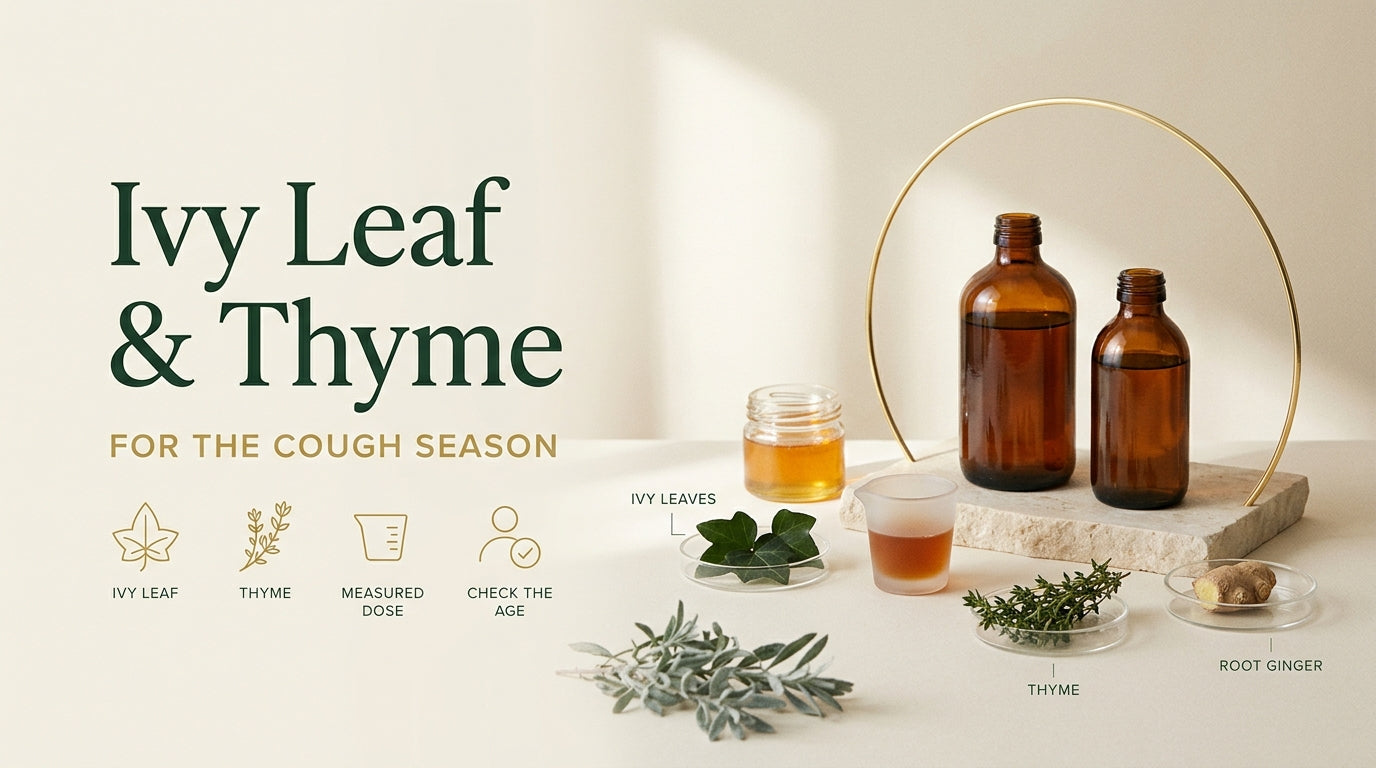
Cough season arrives in Pakistan with the first drop in temperature, and the pharmacy shelf fills with syrups promising to stop it. Most coughs do not need stopping. Knowing which do, and which herbal ingredients have something behind them, saves money and occasionally saves trouble.
Two kinds of cough, two different approaches
- A productive (chesty) cough brings up mucus. It is doing a job, and suppressing it is usually the wrong move. The aim is to make the mucus thinner and easier to clear.
- A dry (tickly) cough produces nothing and often lingers after a cold, driven by an irritated throat. Here the aim is to soothe the irritation.
Buying a suppressant for a chesty cough is the most common mistake in this aisle. Check which one you have before you buy anything.
The herbal ingredients with evidence behind them
- Ivy leaf extract. The best studied of the group. Used traditionally to loosen mucus and ease a chesty cough, and the subject of a reasonable number of clinical trials, mostly in children. It is the backbone of most herbal cough preparations in Europe for that reason.
- Thyme. Traditionally used alongside ivy for its effect on the airways, and the pairing is common because the two are thought to complement each other.
- Liquorice root. Soothing to an irritated throat, and long used for that purpose. It needs respecting rather than overdosing: see the caution below.
- Ginger. Warming and soothing, and genuinely useful for the sore throat part. Our Antem Syrup combines ginger extract with vitamin C.
- Honey. Not herbal, but worth listing. Honey performs as well as many over-the-counter cough preparations for night-time cough in children over one year, which is a stronger result than most herbal ingredients can claim. Never give honey to a baby under twelve months.
Our Nurix Herbal Syrup is built on the ivy leaf and thyme combination.
What "traditionally used" means on a label
You will see that phrase constantly, and it is doing real work. It signals that an ingredient has a long history of use for that purpose, not that trials have proved it treats a disease. It is an honest formulation, not a weak one, but read it for what it says.
No herbal syrup cures a cough. Most coughs are viral and resolve on their own in one to three weeks. What a good syrup does is make those weeks more comfortable, particularly at night.
The unglamorous things that help more
- Fluids. Thin mucus clears more easily than thick mucus. This is the single most useful thing you can do for a chesty cough.
- Steam. A bowl of hot water and a towel, or a hot shower, eases both kinds. Keep children well clear of the bowl itself.
- Humidity. Dry winter air and gas heaters make a dry cough worse. A bowl of water in the room helps more than it sounds like it should.
- Sleeping propped up. Post-nasal drip is often why the cough is worse lying down.
- Smoke. Cigarettes, and the winter smog in Lahore and Punjab generally, prolong a cough considerably. On bad air days, stay in and keep windows shut.
Caution with liquorice, and with children
Liquorice in large amounts or over long periods can raise blood pressure and lower potassium. It should be avoided by anyone with high blood pressure, heart or kidney problems, and by anyone pregnant. Follow the dose on the pack and do not take it continuously for weeks.
For children, check the age range on the pack before anything else, and measure with the supplied cup or spoon rather than a kitchen spoon. Dosing by eye is where accidents happen. Cough and cold preparations are not recommended for children under six, and under two nothing should be given without a doctor.
When a cough needs a doctor, not a syrup
- A cough lasting more than three weeks.
- Coughing up blood.
- Breathlessness, wheezing, or chest pain.
- A high fever that is not settling, or fever returning after you had started improving.
- Unintended weight loss or night sweats. Tuberculosis remains common in Pakistan and a persistent cough is its main symptom, so this is worth taking seriously rather than treating at home.
- Any cough in a baby under three months.
- A child who is struggling to breathe, drawing in at the ribs, or unusually drowsy. That is an emergency.
For support through the season generally, zinc and vitamin C contribute to the normal function of the immune system, and our note on vitamin D in Pakistan is relevant through winter.
This article is general information from the Orbit Naturals formulation team, not medical advice. Our supplements are food supplements, not medicines, and are not intended to diagnose, treat, cure or prevent any disease.