Cart
0
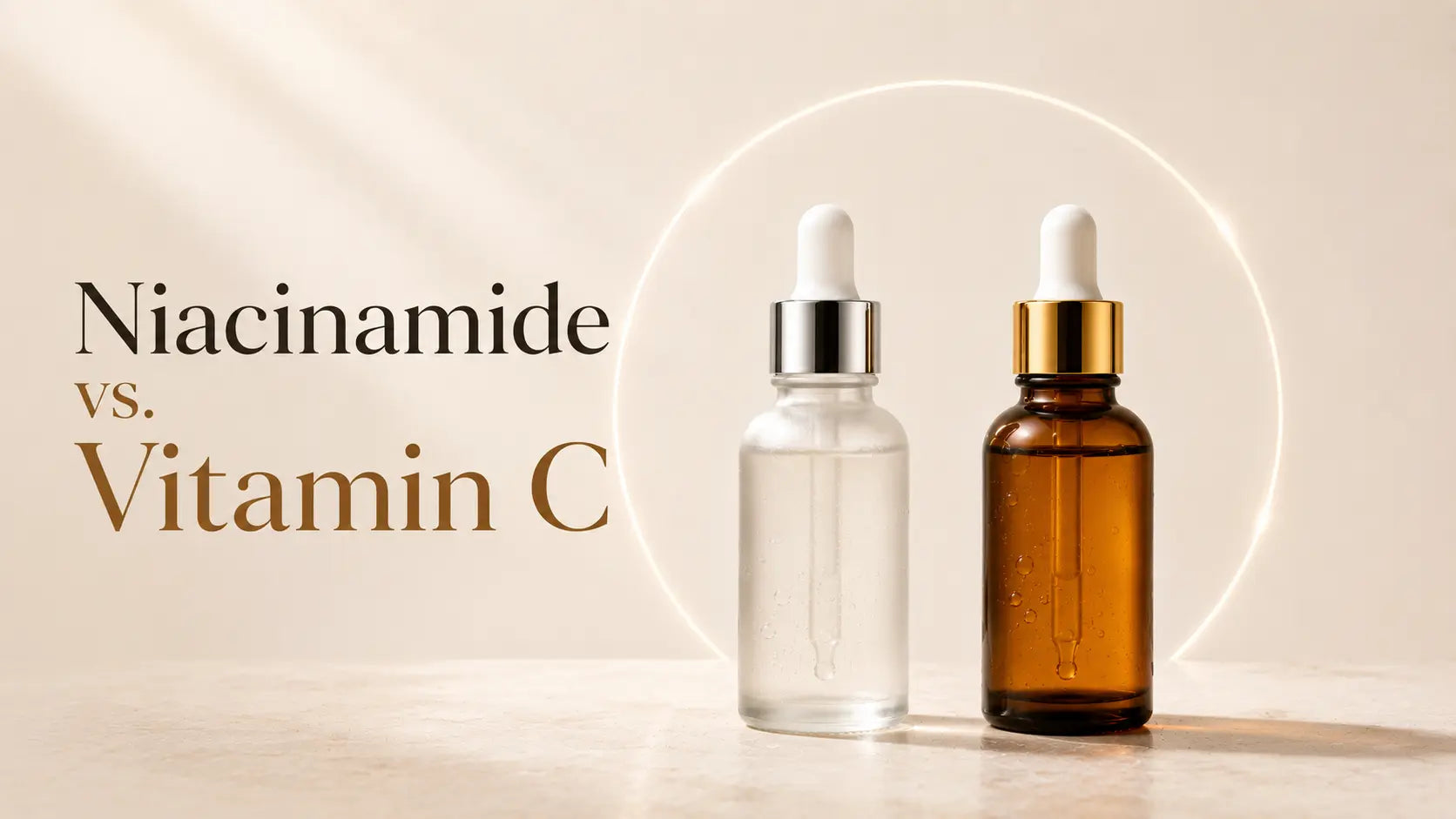
Two ingredients dominate every skincare shelf in Pakistan right now: niacinamide and vitamin C. Both are described as brightening. Both promise an even tone. Most people end up buying one because a friend recommended it, then wonder why it did not do what they expected.
They are not interchangeable. They solve different problems, and knowing which problem you actually have makes the difference between a serum that works for you and one that sits in a drawer.
What niacinamide actually does
Niacinamide is a form of vitamin B3. It is one of the most extensively researched ingredients in skincare, and its appeal is that it is a generalist rather than a specialist.
It supports the skin barrier — the outermost layer that holds moisture in and keeps irritants out. When that barrier is working well, skin looks calmer, feels less reactive, and holds hydration better. Niacinamide also helps regulate how much oil the skin produces, which is why it suits combination and oily skin so well in a humid Rawalpindi summer.
On tone, it works gradually. Rather than acting on existing pigment directly, it helps limit how much pigment reaches the skin surface. The result is a slow, steady evening-out over weeks rather than a dramatic change.
Choose niacinamide if: your skin is oily or combination, you get congested easily, your pores look enlarged, or your skin is sensitive and reacts to most actives. It is also the safer first serum if you have never used one.
What vitamin C actually does
Vitamin C is an antioxidant, and that is the heart of what it does. Through the day your skin is exposed to UV and pollution, both of which generate free radicals. Antioxidants help neutralise them.
It is also more direct on tone than niacinamide. Vitamin C interrupts pigment production at an earlier stage, which is why it is the usual choice for dullness and visible dark spots. And it plays a role in the skin's natural collagen process, which is why it appears in almost every routine aimed at early signs of ageing.
The trade-off is that vitamin C is temperamental. It degrades in light and air, which is why a well-made vitamin C serum comes in amber or opaque glass and often includes vitamin E and ferulic acid — not as marketing additions, but because that combination keeps the vitamin C stable and extends how long it stays active.
Choose vitamin C if: your main concern is dullness, uneven tone or dark spots, or you want antioxidant support against daily sun and pollution exposure.
Can you use both?
Yes. The old advice that they cancel each other out came from early formulation chemistry and does not hold for modern products.
The simplest approach is to split them by time of day:
- Morning — vitamin C, then moisturiser, then sunscreen. Antioxidants make most sense before the day's exposure.
- Evening — niacinamide, then moisturiser. Barrier support overnight.
If you would rather keep things simple, pick one and use it consistently. A single serum used every day for three months will do more for your skin than four serums used inconsistently.
How long before you see anything
Longer than most marketing suggests. Skin turns over roughly every four to six weeks, so meaningful change takes at least two full cycles.
- Weeks 1–2 — hydration and texture. Skin feels smoother.
- Weeks 4–6 — oiliness and the look of pores start to settle with niacinamide.
- Weeks 8–12 — tone changes become visible with either ingredient.
One thing overrides all of it: without daily sunscreen, neither serum can keep up. UV exposure drives pigment faster than any serum can address it. If you use only one product from your routine, make it sunscreen.
Getting started
Introduce one new active at a time and give it two weeks before adding anything else. Patch test on the inner forearm first. If your skin is currently irritated or compromised, repair the barrier before adding actives — niacinamide is the gentler starting point.
Orbit Naturals has been formulating at our own facility in Rawalpindi since 1998. Our Niacinamide Serum 10% with Zinc PCA and Glow C Serum with 20% Vitamin C, E and Ferulic Acid are developed and manufactured in-house.
This article is general information, not medical advice. For persistent skin concerns, consult a dermatologist. Patch test any new product before first use.