Cart
0
Glutathione is sold in Pakistan with some of the boldest promises in the supplement aisle, usually about skin colour. It is a genuinely interesting molecule, and it deserves a more honest description than it normally gets.
What glutathione is
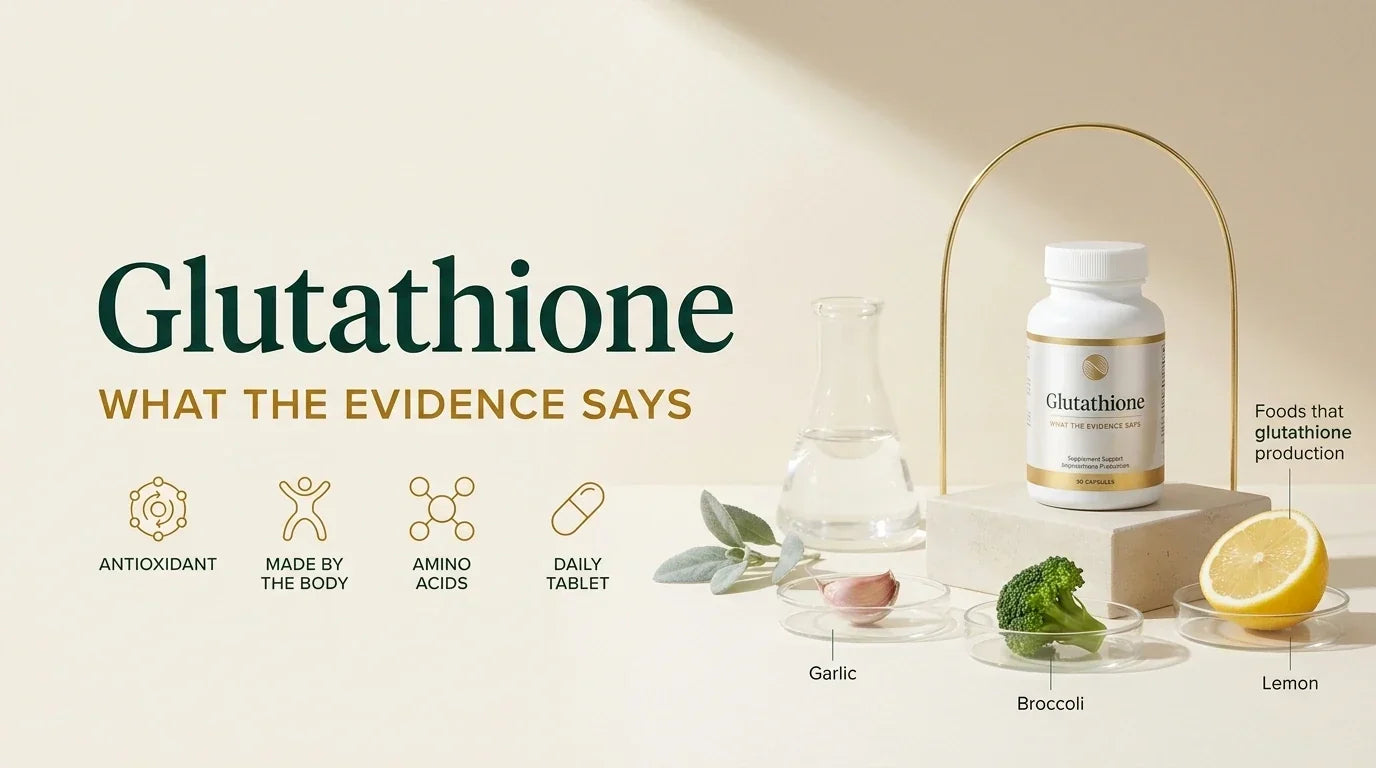
Glutathione is a small protein your body makes itself, built from three amino acids: cysteine, glycine and glutamic acid. It is found in every cell, and it is one of the main antioxidants your body uses to protect cells from oxidative stress. Your liver uses it constantly as part of how it processes what you eat, drink and breathe.
In other words, this is not an exotic import. It is something you are producing right now.
The skin-whitening question, answered honestly
You will see glutathione advertised as a skin-whitening treatment, often with dramatic before-and-after photographs. Here is where the evidence stands: some small studies have looked at glutathione and melanin production, results have been mixed, and most trials have been short and involved few participants. There is no good basis for promising a change in skin colour, and we are not going to make that claim about Origlow or anything else we make.
What we can say is that glutathione is an antioxidant, and that a supplement is a supplement, not a treatment.
Two further points worth knowing. Intravenous glutathione for cosmetic purposes is widely offered and carries real risks, and regulators in several countries have warned against it. And if your goal is more even-looking skin, the evidence is far stronger for daily sun protection, because pigmentation deepens with UV exposure. Our note on SPF as a year-round habit covers that.
Absorption: the honest complication
Glutathione taken by mouth is largely broken down in the digestive tract into its component amino acids before it reaches the bloodstream. Researchers have been working on this for years, which is why you see liposomal forms, S-acetyl forms, and formulas that instead supply the raw materials your body uses to build its own.
Anyone telling you that swallowing a glutathione tablet straightforwardly raises glutathione in your skin is skipping over an unresolved scientific question.
Supporting your own production
Since your body makes glutathione continuously, the things that support that process are unglamorous but real:
- Enough protein in the diet, which supplies the amino acids it is built from.
- Sulphur-rich vegetables: garlic, onions, broccoli, cabbage.
- Vitamin C, which helps recycle glutathione back to its active form. Our vitamin C serum works on the skin's surface, while dietary vitamin C works from within.
- Adequate sleep, and less alcohol and smoking, both of which increase the oxidative load your body has to handle.
Taking it sensibly
- Follow the dose on the pack. More is not better with any antioxidant.
- Give any supplement a fair trial period, and judge it against how you feel rather than against a photograph.
- Be sceptical of any product promising a change in skin colour by a set date.
Who should check with a doctor first
- Anyone pregnant or breastfeeding.
- Anyone with asthma, as inhaled forms have been reported to trigger symptoms.
- Anyone taking prescription medication, particularly chemotherapy, where antioxidants need medical oversight.
This article is general information from the Orbit Naturals formulation team, not medical advice. Our supplements are food supplements, not medicines, and are not intended to diagnose, treat, cure or prevent any disease.