Cart
0
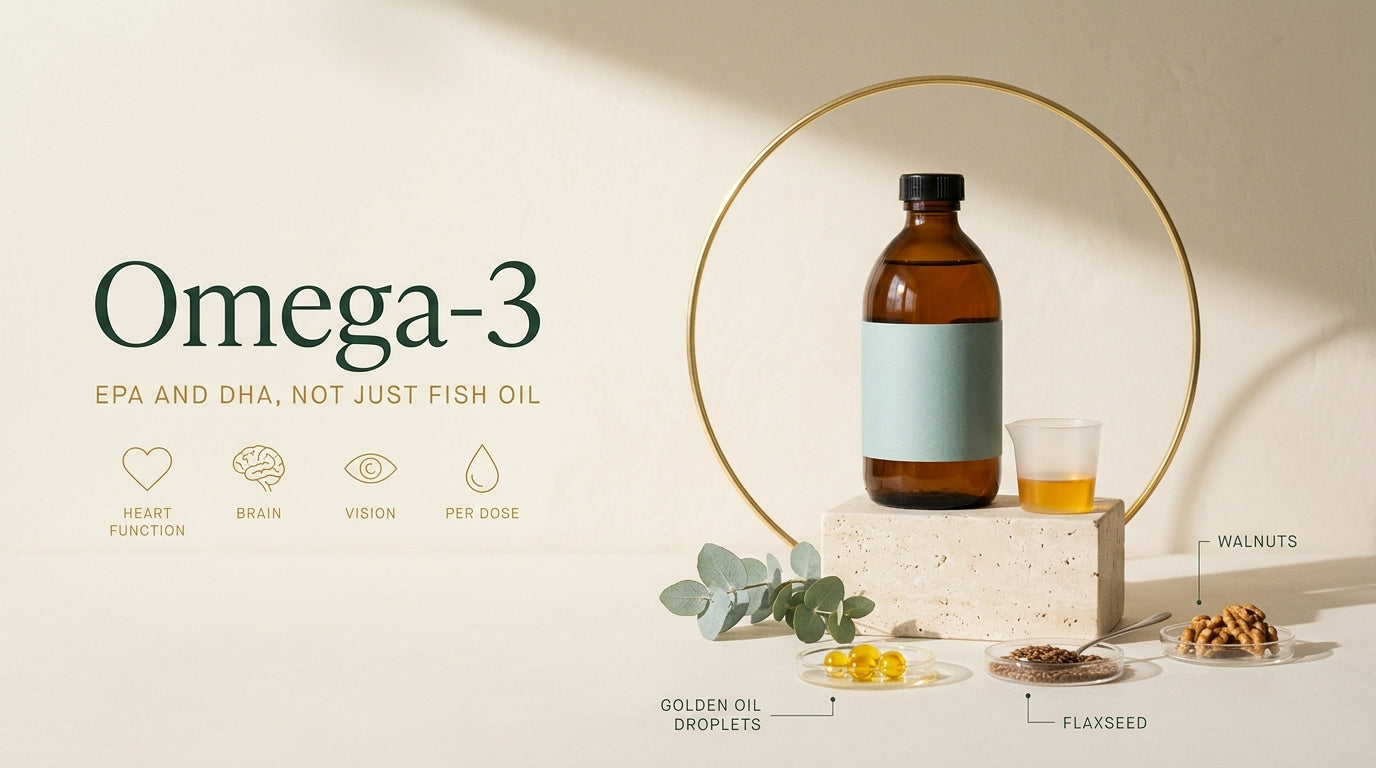
Omega-3 is one of the few supplement categories where the label genuinely tells you what you are buying, if you know which two numbers to look for. Most people buy on the big number on the front, which is usually the least useful one on the pack.
Three omega-3s, and only two of them do the work
There are three omega-3 fatty acids worth knowing:
- EPA (eicosapentaenoic acid) and DHA (docosahexaenoic acid). These are the long-chain forms found in oily fish. They are the ones the established health claims refer to.
- ALA (alpha-linolenic acid), found in flaxseed, chia and walnuts. Your body converts a little of it into EPA and DHA, but the conversion is inefficient, so ALA is not a straightforward substitute.
If a product talks only about "omega-3" without separating EPA and DHA, you cannot compare it with anything.
The number on the front is not the dose
This is the single most common misunderstanding. A pack saying "1000mg fish oil" is telling you the weight of the oil, not the amount of omega-3 in it. The EPA and DHA content might be 300mg of that 1000mg, or it might be 600mg. Only the back of the pack tells you.
So when comparing two products, ignore the front and find the line that gives EPA and DHA in mg per dose. Then work out the cost per day of that amount. Products that look expensive often turn out cheaper on this basis, and vice versa.
Our OM Plus Syrup states its omega-3 content per measured dose on the pack, alongside vitamins A, C and D.
What omega-3 actually contributes to
The established claims are narrower than the marketing suggests, and they are dose-dependent:
- EPA and DHA contribute to the normal function of the heart.
- DHA contributes to the maintenance of normal brain function and normal vision.
- DHA taken by the mother contributes to the normal brain and eye development of the foetus and breastfed infants.
What omega-3 is not is a treatment for heart disease, depression or arthritis. Research continues in all of those areas and the results are genuinely mixed. A food supplement supports normal function; it does not treat a condition.
Syrup, softgel or capsule
Format matters more for compliance than for chemistry. Softgels are convenient and avoid the taste entirely. A syrup suits children and anyone who struggles with capsules, and it makes the dose easy to adjust, though it must be refrigerated after opening and finished within the period stated on the pack.
Whichever you choose, the oil is perishable. That is not a marketing point, it is chemistry.
Rancidity, and the burping problem
Omega-3 oils oxidise when exposed to heat, light and air, and oxidised oil is both unpleasant and pointless. In a Pakistani summer this matters more than it does in Europe.
- A strong, sharp fishy smell on opening suggests the oil has already turned. Fresh fish oil smells mild.
- Store it away from the kitchen window and the top of the fridge, which is warmer than people assume.
- Check the expiry date, and buy a pack size you will actually finish.
- Fishy repeats after taking it usually mean the oil is oxidised, or that you took it on an empty stomach. Taking it with a meal containing some fat helps on both counts.
Food first, as always
Two portions of oily fish a week covers most people. In Pakistan that is easier said than done away from the coast, and for many households supplementation is the more realistic route. If you do eat fish, rahu, salmon and sardines all contribute.
Who should check with a doctor first
- Anyone taking blood-thinning medication such as warfarin, as higher doses of omega-3 can affect clotting.
- Anyone due for surgery, who should mention it beforehand.
- Anyone pregnant or breastfeeding, who should avoid cod liver oil specifically because of its vitamin A content.
- Anyone with a fish or shellfish allergy.
If you are putting a daily routine together, our note on eight checks before buying a supplement covers how to read the rest of the label.
This article is general information from the Orbit Naturals formulation team, not medical advice. Our supplements are food supplements, not medicines, and are not intended to diagnose, treat, cure or prevent any disease.