Cart
0
Vitamin D is the deficiency people in Pakistan are most likely to have without knowing it. We get plenty of sunshine, which is exactly why the assumption is that nobody here could be short of it. The surveys say otherwise, and understanding why explains what to do about it.
Why sunshine is not enough
Your skin makes vitamin D when UVB light reaches it. That process needs bare skin, sunlight in the middle of the day, and time. A few things get in the way for most people here:
- Most daily routines keep people indoors between 10am and 3pm, when UVB is strongest.
- Clothing that covers the arms and legs, for cultural or practical reasons, leaves little skin exposed.
- Deeper skin tones have more melanin, which is protective against sun damage but slows vitamin D production.
- Smog and dust in Lahore, Karachi and Rawalpindi scatter UVB before it reaches street level.
- Sunscreen, quite correctly worn, reduces the UVB that reaches the skin.
None of these are reasons to sit in the sun without protection. Skin cancer and photoageing are real, and daily SPF 50+ is still the right habit. It does mean that for many people, diet and supplementation carry more of the load than the climate suggests.
What vitamin D actually does
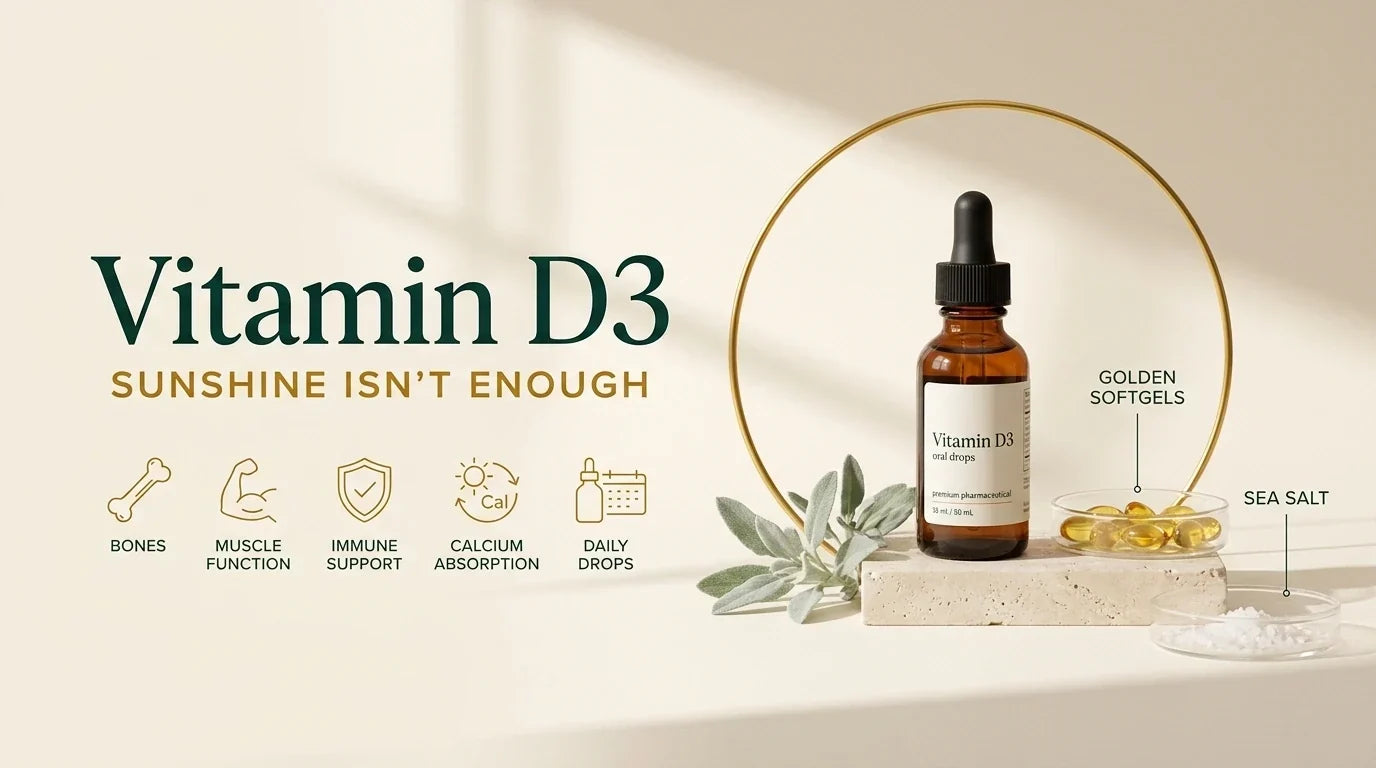
Vitamin D contributes to the normal absorption and use of calcium and phosphorus, to the maintenance of normal bones, teeth and muscle function, and to the normal function of the immune system. That is the honest, evidence-backed list. It is involved in a great many other processes that researchers are still working through, and you will see claims online that run far ahead of the evidence.
The practical point is that calcium without enough vitamin D is only half the job. That is why our Osteo Plus tablets pair calcium with vitamin D3 and zinc rather than selling calcium alone.
Food sources, and their limits
Few foods contain much vitamin D naturally. Oily fish is the strongest source, followed by egg yolk and liver. Fortified milk and cereals help where they exist. In a typical Pakistani diet, the amounts involved are small compared with what your body would make from regular sun exposure, which is why food alone rarely closes a real gap.
D2 or D3?
Vitamin D comes in two forms. D2 (ergocalciferol) comes from plant and fungal sources. D3 (cholecalciferol) is the form your own skin makes, and it is the form used in our Orbi D drops and in Osteo Plus. Most research finds D3 raises and maintains blood levels more effectively, which is why it is the usual choice in supplements.
How much, and why you should not guess
This is where honesty matters more than marketing. Vitamin D is fat-soluble, so unlike vitamin C your body stores it rather than flushing out the excess. Sensible daily maintenance doses are very different from the high-dose courses sometimes prescribed to correct a diagnosed deficiency, and the gap between the two is large.
A blood test (25-hydroxyvitamin D) tells you where you actually stand, and it is widely available in Pakistan at modest cost. If you are supplementing beyond an everyday maintenance dose, that test and a doctor's guidance are the right way to do it, not a number from a blog or a forum.
Who should speak to a doctor first
- Anyone pregnant or breastfeeding.
- Anyone with kidney disease, liver disease, or a condition affecting calcium levels.
- Anyone taking prescription medication, including diuretics, steroids or heart medication.
- Parents buying for a child, where doses differ by age and weight.
Practical points
- Take vitamin D with a meal containing some fat. Absorption improves noticeably.
- Consistency matters more than any single large dose. A modest amount taken regularly does more than an occasional big one.
- Store drops away from heat and direct sunlight, and use the dropper provided rather than estimating.
- If you have been told your levels are low, retest after the course your doctor recommends rather than continuing indefinitely.
This article is general information from the Orbit Naturals formulation team, not medical advice. Our supplements are food supplements, not medicines, and are not intended to diagnose, treat, cure or prevent any disease. If you have symptoms or a health condition, please see a doctor.