Cart
0
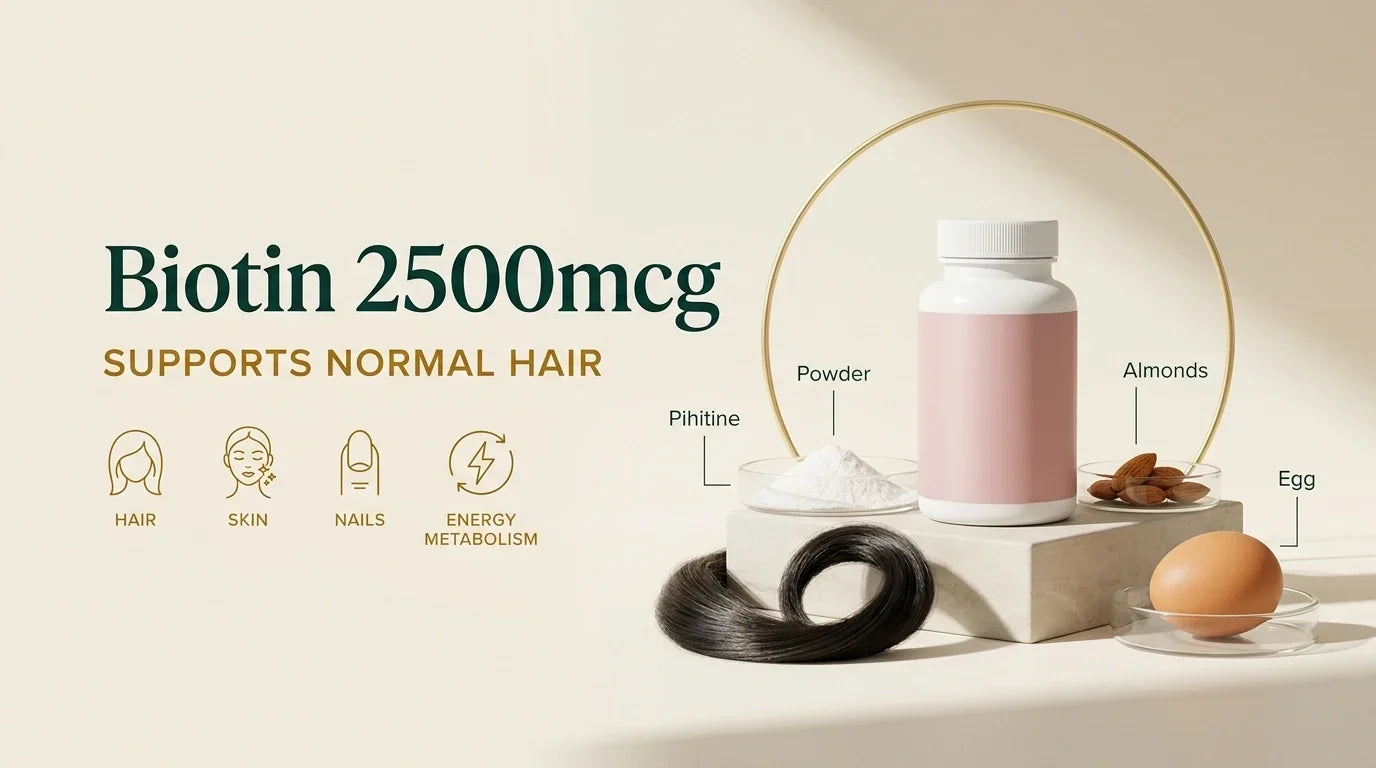
Biotin is the most requested supplement in hair care, and also the most misunderstood. It is worth knowing what it genuinely does, what it cannot do, and what else is usually going on when hair starts thinning.
What biotin is
Biotin is vitamin B7, a water-soluble vitamin involved in how your body handles fats, carbohydrates and protein. Keratin, the protein that hair and nails are built from, depends on that machinery working properly. Biotin contributes to the maintenance of normal hair and skin, and to normal macronutrient metabolism.
Note the word "normal". These are maintenance claims, and they are the ones the evidence supports.
What the evidence actually shows
Biotin deficiency causes hair thinning and brittle nails, and correcting that deficiency reverses the problem. That much is clear. What is far less clear is whether extra biotin helps someone whose levels are already adequate, and most reviews conclude the evidence there is thin.
True deficiency is uncommon, though it does happen: with long-term use of certain medicines, some digestive conditions, and in people eating a lot of raw egg white, which binds biotin and blocks absorption.
So the useful framing is: biotin supports normal hair, rather than creates new growth. Our Oritin biotin 2500mcg tablets are built on that basis.
The nutrients people forget
When hair sheds more than usual, the cause is rarely biotin alone. The usual suspects are:
- Iron. Low ferritin is one of the commonest findings in women with hair shedding, and it is easily tested.
- Thyroid function. Both underactive and overactive thyroid affect hair, and both need a doctor rather than a supplement.
- Protein intake. Hair is protein. Very low-calorie or restrictive diets show up in hair months later.
- Zinc. Zinc contributes to the maintenance of normal hair, and it is worth having in the picture. See our note on zinc and copper before taking it long term.
- Recent illness, surgery, childbirth or major stress. These commonly trigger a wave of shedding two to three months afterwards.
Why timing feels so slow
Hair grows roughly one centimetre a month, and each follicle cycles through growing, resting and shedding phases. Anything you change today shows up in hair that emerges months from now. Three months is the minimum sensible period before judging any routine, and six is better.
This is also why shedding after an illness or a stressful period seems to come out of nowhere. The trigger was months earlier.
Scalp care is part of hair care
Nutrition works from the inside, but the scalp is where hair is anchored. Keeping it clean, comfortable and free of persistent flaking gives the follicle a better environment. A leave-on lotion such as Foligen, with biotin, zinc, copper, L-arginine and saw palmetto, is meant to work alongside a sensible diet rather than replace it.
A note on very high doses
Biotin is water-soluble and generally well tolerated. There is one practical catch worth knowing: high-dose biotin can interfere with certain laboratory blood tests, including some thyroid and cardiac tests, producing misleading results. If you are having blood tests, tell the laboratory or your doctor that you take biotin.
When to see a doctor rather than buy a supplement
- Sudden or patchy hair loss, or bald spots.
- Hair loss with tiredness, weight change, or changes in periods.
- An itchy, painful or scaling scalp that does not settle.
- Hair loss in a child.
This article is general information from the Orbit Naturals formulation team, not medical advice. Our supplements are food supplements, not medicines, and are not intended to diagnose, treat, cure or prevent any disease.