Cart
0
Inositol appears on a lot of supplement labels without much explanation of what it is. It is not a vitamin, though it was once classified as one. It is a sugar alcohol that occurs naturally in the body and in food, and it plays a part in how cells respond to signals.
Two forms come up most often, and the distinction between them is the whole reason products list a ratio.
Myo-inositol and D-chiro-inositol
Myo-inositol is the most abundant form in the body. It is involved in cellular signalling, including the pathways through which cells respond to insulin.
D-chiro-inositol is produced from myo-inositol by an enzyme, and the conversion rate differs between tissues depending on what each tissue needs.
Because the two forms are not interchangeable and the body maintains different ratios in different places, formulations typically combine them rather than using either alone. A 40:1 ratio of myo to D-chiro is the most commonly used, chosen to approximate the ratio found in human plasma.
What it is used for
Inositol has been studied most extensively in the context of metabolic and reproductive wellbeing, and it is widely used as a nutritional supplement in that area for both women and men.
It is important to be accurate about what that means. Inositol is a food supplement, not a medicine. It does not treat, cure or prevent any condition, and anyone dealing with a diagnosed reproductive or metabolic condition should be under the care of a doctor. A supplement may form part of a wider plan that a clinician has agreed — it is not a substitute for that plan, and it is not something to start instead of seeking a diagnosis.
That distinction matters. Conditions affecting fertility and metabolism need proper investigation, and delaying that in favour of self-management is the genuine risk here.
Where it occurs in food
Inositol is present in a reasonably wide range of foods:
- Citrus fruits, particularly cantaloupe and oranges
- Beans, chickpeas and lentils
- Whole grains, especially bran
- Nuts and seeds
The body also synthesises it from glucose, so dietary intake is not the only source.
Why sachets
Inositol is typically taken in gram quantities rather than milligrams. That is a large amount to deliver in tablet form — it would take several tablets to match one sachet.
A powder sachet dissolved in water delivers the full amount in one step and absorbs readily. It also allows other supporting nutrients to be included in the same serving without adding to a tablet count.
Taking it
Dissolve the sachet fully in a glass of water and take as directed by your physician or pharmacist.
Consistency matters more than timing. Inositol is generally taken over a sustained period rather than occasionally, and studies looking at it typically run for several months.
It is generally well tolerated. Higher intakes can cause mild digestive upset in some people, which usually settles or resolves by splitting the daily amount.
Before you start
Speak to your doctor first if you are pregnant or breastfeeding, if you take any regular medication, particularly anything affecting blood sugar, or if you are managing a diagnosed condition.
And if you are taking this in connection with fertility or a metabolic concern, do that alongside medical care rather than instead of it. A supplement is one input among several, and the others usually matter more.
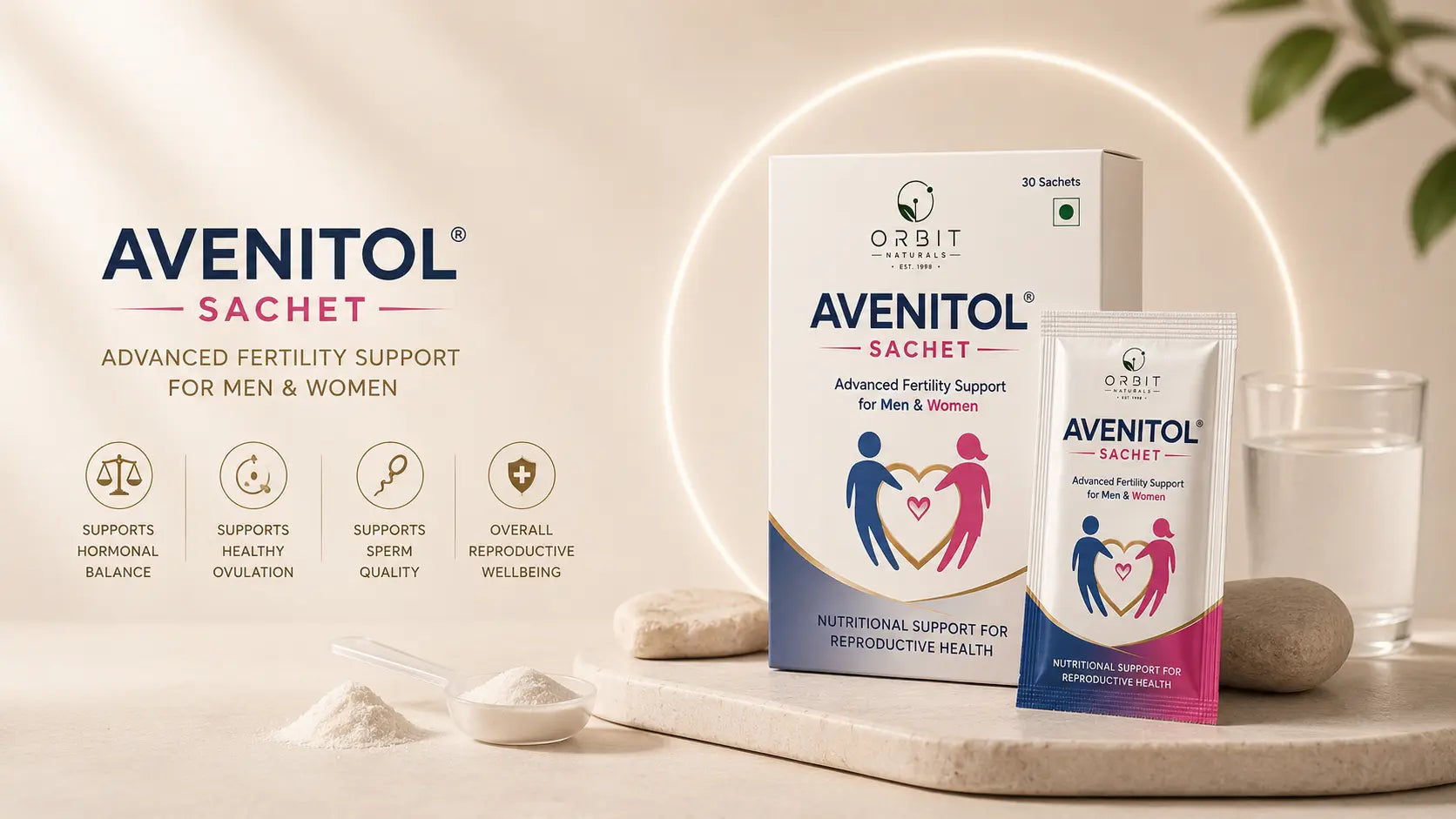
Orbit Naturals has been formulating at our own facility in Rawalpindi since 1998. Our Avenitol Sachets provide Myo-Inositol and D-Chiro-Inositol, developed and manufactured in-house.
Food supplement. Not a substitute for a varied and balanced diet or a healthy lifestyle. Do not exceed the recommended intake. Keep out of reach of children. Consult your physician before use if pregnant, breastfeeding, or taking other medication. This article is general information, not medical advice.